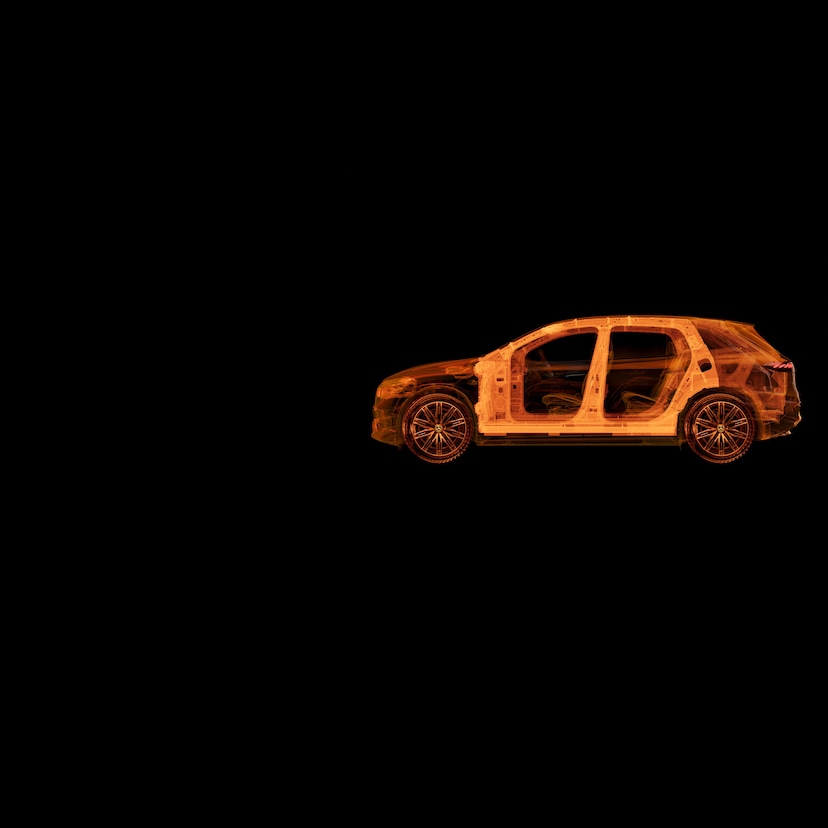
Transparent side view of an Mercedes-Benz car showing interior structures.

Drive safely with our advanced safety systems.

Ready before you are: With Mercedes-Benz safety systems and features, protection starts before you even need it.

MB.DRIVE

Your safety is our mission.

Safety isn't just about ticking boxes – it's about protecting real lives. That's why our "Real-Life Safety" philosophy builds on over 50 years of accident research to go beyond the requirements of standard test scenarios. By engineering our cars to handle real-life road accidents, we are contributing to making road traffic safer for everyone. Traffic safety is therefore one of our goals in our sustainable business strategy.
Interior view of an Mercedes-Benz car cockpit.

Active safety systems

Avoiding collisions.

Mercedes-Benz safety features are designed to protect you every step of the way. From advanced systems that provide assistance and help avoid accidents to innovative technologies that prepare for the unexpected. And, of course, we have many systems that protect you in the event an impact is unavoidable. Even after an accident, our cars step in to ensure help arrives quickly, showing our commitment to safety from start to finish.
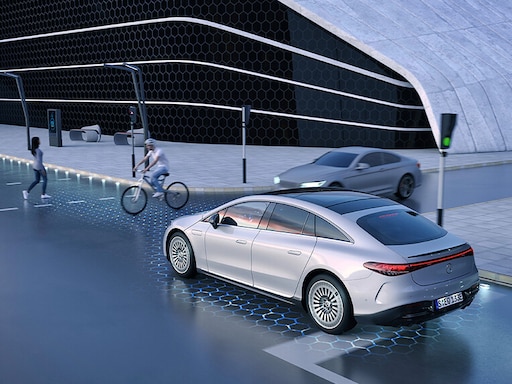
A Mercedes-Benz car approaching an intersection activates brake assist as cyclist unexpected crosses its path.

Brake Assist - applying pressure

Engineered to warn of a possible collision with other roads users. Should the driver fail to react or apply insufficient braking pressure, the system can step in and brake autonomously. It can help reduce the severity of an impact or even prevent it altogether.

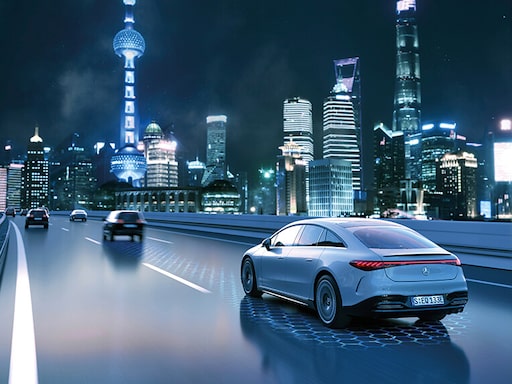
Multiple cars driving on a road.

Congestion Emergency Braking Function

Provides additional safety if there is an unexpected traffic jam ahead and no possibility of evasion. This increases the safety potential of the system and can reduce speed by up to 100 km/h in good road conditions.

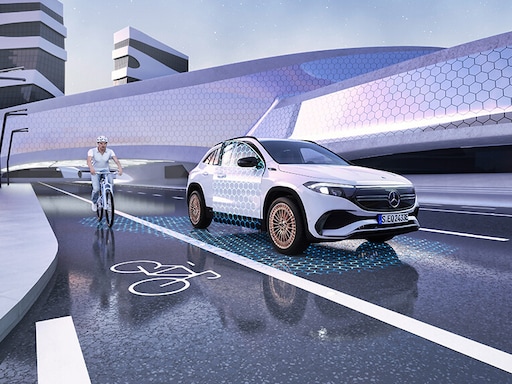
A Mercedes-Benz car driving next to a cyclist in the vehicle's blind spot.

Blind Spot Assist - keeping an eye out

This feature helps you detect vehicles in your blind spot with sensors monitoring the area next to and behind your vehicle. If you signal a lane change while a vehicle is detected, it flashes a warning and sounds an alert. Blind Spot Assist Plus can even apply light braking on one side to guide you away from danger.

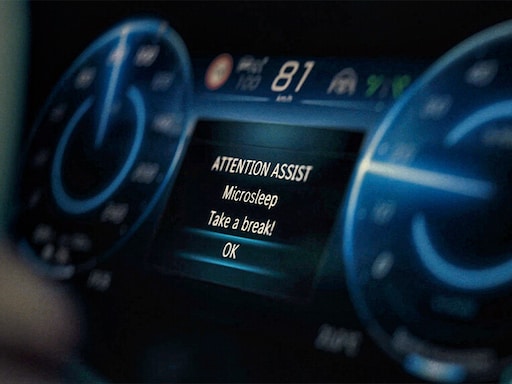
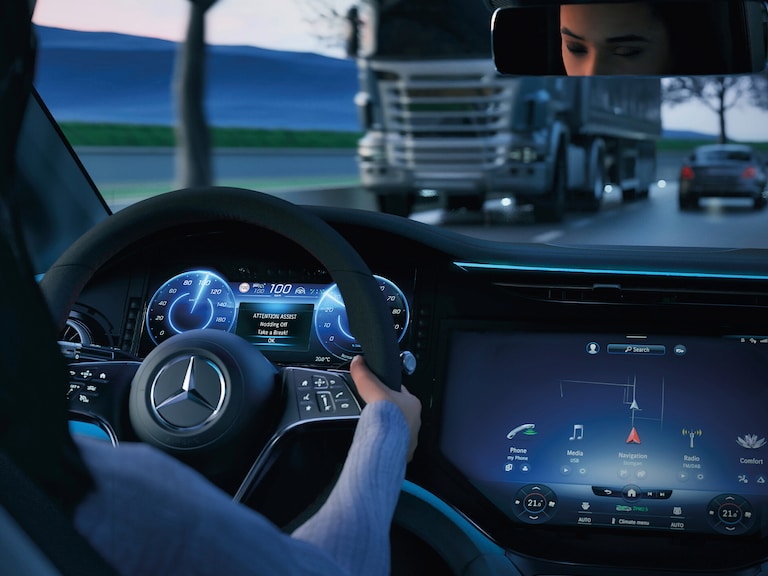
MBUX display showing a message advising the driver to take a break.

ATTENTION ASSIST - take a break

Detects certain signs of drowsiness, especially during long monotonous journeys. The system provides visual and acoustic warnings to prompt drivers to take a break in good time. In models equipped with a driver camera, it can even detect microsleeps.

Crash safety

Reducing the impact.

Built to protect when it matters most: From the rigid passenger cell and crumple zones to seatbelts, airbags and pre-collision systems, every element is designed to reduce the risk of injury if an accident can't be avoided.
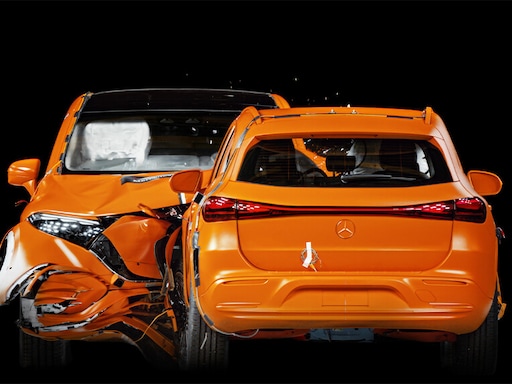
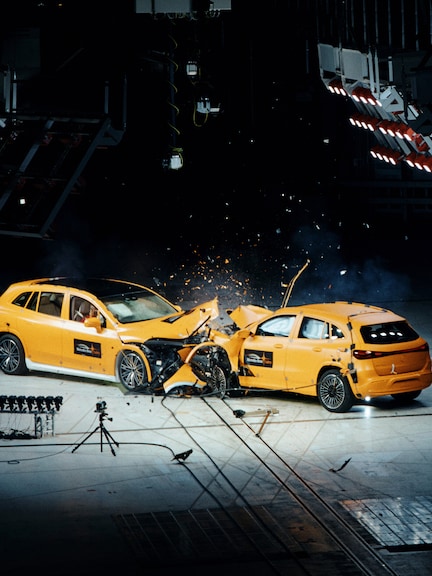
Two Mercedes-Banz cars colliding head-on in a controlled test simulation.

Crumple zones - invisible protectors

Designed to absorb and redirect impact forces, crumple zones shield the rigid passenger cell and reduce the risk of injury. It’s clever engineering that sacrifices itself to help protect you, your passengers and the other party.

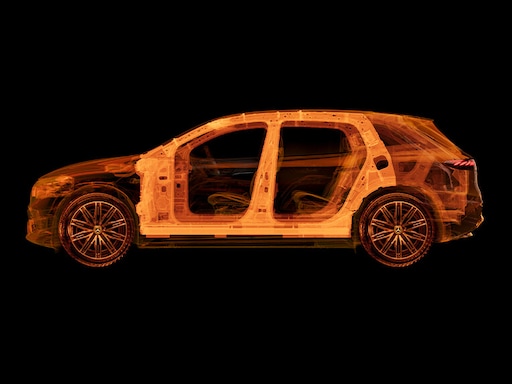
Transparent side view of an Mercedes-Benz car showing interior structures.

Passenger safety cell - built to shield

Your safe space in the event of a collision, designed to stay intact and preserve vital room for survival. Its rigid structure not only protects occupants but helps to ensure doors can be opened after a crash, providing crucial access for rescue and escape.

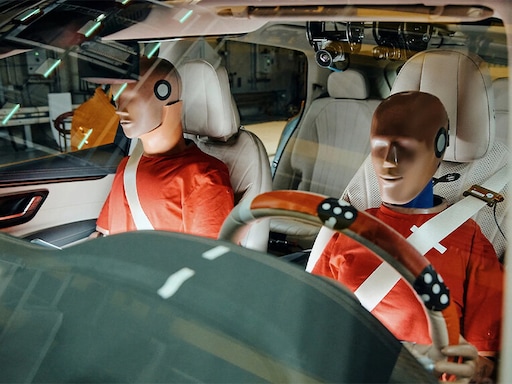
Two crash test dummies seated in an Mercedes-Benz car cockpit.

Restraint systems - your safety net

Seat belts and airbags work together to minimise the risk of injury in a crash. Seat belts secure you firmly in place, while airbags cushion the impact by absorbing energy and reducing forces on the body. These systems are the backbone of in-car safety, ready to protect when it matters most.

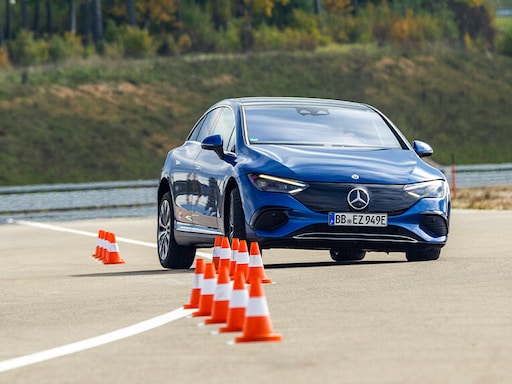
Mercedes-Benz car driving past traffic cones on a test track.

PRE-SAFE® system - a head start on safety

PRE-SAFE® uses the critical moments before a potential crash to protect you. From tensioning seat belts to adjusting seats, it can help reduce impact forces. PRE-SAFE® Sound even triggers a reflex in the human hearing system to reduce the stress of a loud collision.

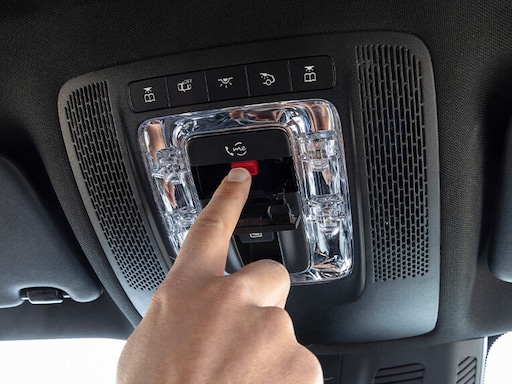
Driver initiates an emergency call by pressing a button in the cockpit.

After an accident - help at hand

Our emergency call system is designed to save precious time in critical moments. It calls for help automatically when it detects a severe accident - thereby potentially shortening the time until the rescue services arrive. There is also a button to call manually if required.

Going above and beyond

Advancing the science of safety through accident research.

For decades, Mercedes-Benz has been redefining safety through innovation and research. From pioneering crash tests to analysing real-world accidents, every detail drives our development. By blending advanced technology, human-focused insights and expert collaboration, we create features that make every journey safer.

Examining real-life accidents to make our cars safer.

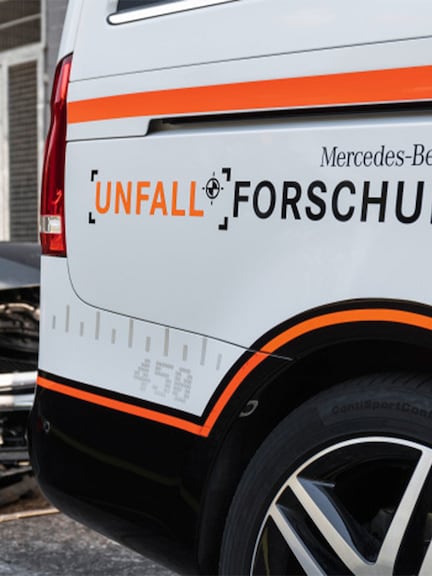
For more than 55 years, our in-house accident research centre has been investigating accidents involving Mercedes-Benz vehicles. The aim is to understand how injuries happen, how to reduce them and which advanced safety systems could have prevented the crash. What’s more, findings from real-life accidents can be used to define requirements for crash tests.
Mercedes-Benz car with "Accident research" printed on ist side.

The crash test experts.

For over 65 years, Mercedes-Benz has been a pioneer in safety testing, continuously raising the bar for vehicle protection. Today, our experts conduct up to 900 crash tests and up to 1,700 sled tests every year at our Technology Center for Vehicle Safety – that’s more than seven per day. By the time it is signed off for market launch, every completely new model has undergone up to 15,000 crash simulations and about 150 real crash tests.
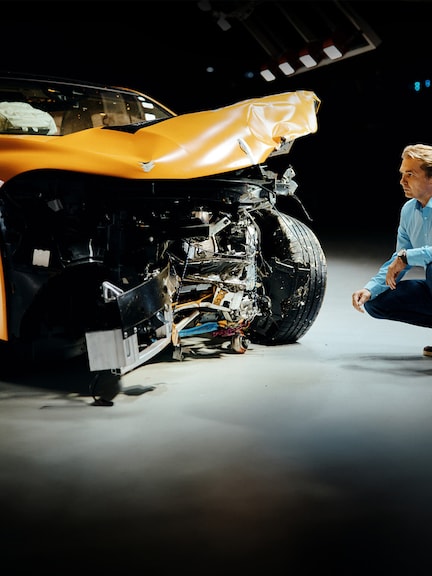
Crash test expert examing front-crashed Mercedes-Benz car while crouching bedite it.

Crash test dummies – as diverse as we are.

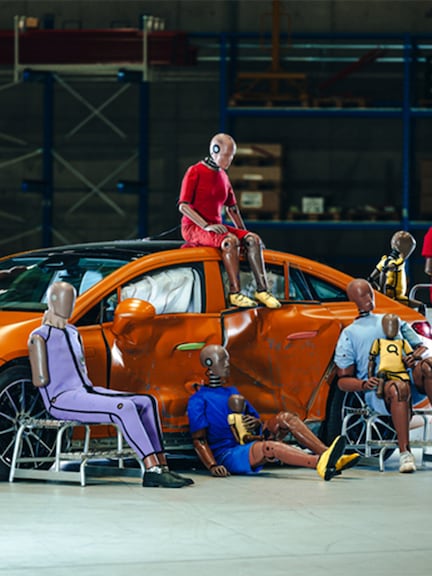
We know that every human body is different. That’s why we use around 120 test dummies with a variety of body sizes and shapes, ranging in weight from that of a toddler to a super heavyweight boxer. The aim is to ensure all our passengers are safe if their Mercedes-Benz is involved in an accident. We have been using crash test dummies representing female occupants for more than 20 years.
Multiple crash test dummies sitting on and arround a Mercedes-Benz car.

Safety is not a matter of drivetrain technology.

In the first-ever public crash test between two all-electric vehicles, we demonstrated safety in realistic collision scenarios. It proved that our vehicles are extremely safe, no matter what technology drives them.
Frontal crash between two Mercedes-Benz cars captured by crash test cameras.